Draft Engagement Strategy
Other elements in this consultation
Appendix 1: Consultation and Engagement Activities Plan
|
Types of engagement |
Who? |
Method |
Scope |
|---|---|---|---|
|
Prior to Consultations |
|||
|
Comms |
District wide |
Mail out (email and postal) Social media Press releases |
Inform interested parties about the context, timeline, and content of the new local plan, its launch, and how to get involved in its preparation. Set the context of the local plan, ensuring that parties are aware of the changes to national policy and local plan making. |
|
Scoping Consultation |
|||
|
Comms |
General consultation bodies Specific consultation bodies Residents or people carrying out business in the local plan area |
Mail out (email and postal) Social media Press releases |
Inform stakeholders of the context of the Local Plan scoping consultation, and how to get involved. Provide information on how to comment on the content of the scoping documents. |
|
Consultation on scoping documents |
General consultation bodies Specific consultation bodies Residents or people carrying out business in the local plan area |
Online publication of scoping documents including engagement strategy |
Publish relevant documents for the scoping consultation, including accessible versions of the documents. Seek comments from relevant parties on each document. Include webpages, mapping and digital-first approach to consultation. Making documents available for public inspection at council offices and local libraries during the consultation period. |
|
Parish/Town Council engagement |
All relevant Parish and Town Councils |
Webinar |
Inform and engage parishes about context of the new local plan, answer any questions parishes have about the documents. |
|
Neighbouring authorities |
Relevant neighbouring authorities |
Online meetings |
Identification/discussion of potential cross-boundary issues and potential for joint evidence work/evidence work scoping. |
|
Key stakeholder engagement |
Targeted key stakeholders |
Online meetings and/or workshops |
To discuss scoping consultation documents and scope of evidence base work. |
|
Consultation on proposed plan content and evidence |
|||
|
Comms |
General consultation bodies Specific consultation bodies Residents or people carrying out business in the local plan area Anyone who requested to be notified of the consultation |
Mail out (email and postal) Social media Press releases Targeted engagement strategies for underrepresented groups |
Inform stakeholders of the context of the local plan consultation, and how to get involved. Provide information on how to comment on the content of the documents. |
|
Consultation on published documents |
General consultation bodies Specific consultation bodies Residents or people carrying out business in the local plan area Anyone who requested to be notified of the consultation |
Online publication of consultation documents |
Publish relevant documents for the consultation, including accessible versions of the documents. Seek comments from relevant parties on each document. Include webpages, mapping and digital-first approach to consultation. Making documents available for public inspection at council offices and local libraries during the consultation period. |
|
Public engagement |
Community groups underrepresented groups |
‘Menu of engagement methods’ |
Inform and engage members of the public about context of the new local plan |
|
Parish/Town council engagement |
All relevant parish and town councils |
In-person workshop/s with parishes |
Inform and engage parishes about context of the new local plan, answer any questions Parishes have about the documents. |
|
Targeted engagement with underrepresented groups |
Community groups Identified Underrepresented groups |
Engagement approaches relevant for each group |
Seek to understand key issues facing local areas and local people. |
|
Key stakeholder engagement |
Targeted key stakeholders |
Online meetings and/or workshops |
Seek to understand key issues and opportunities facing stakeholders. |
|
Neighbouring authorities |
Relevant neighbouring authorities |
Online meetings |
Continuing discussion of relevant cross-boundary issues and evidence. |
|
Targeted landowner engagement |
Landowners/Agents |
Online meetings/In-person meetings |
Discussions in relation to emerging site options. |
|
Consultation on proposed plan |
|||
|
Comms |
General consultation bodies Specific consultation bodies Residents or people carrying out business in the local plan area Anyone who requested to be notified of the consultation |
Mail out (email and postal) Social media Press releases Targeted engagement strategies for underrepresented groups |
Inform stakeholders of the context of the local plan consultation, and how to get involved. Provide information on how to comment on the content of the documents. Articles in appropriate council newsletters. |
|
Consultation on published documents |
General consultation bodies Specific consultation bodies Residents or people carrying out business in the local plan area Anyone who requested to be notified of the consultation |
Online publication of consultation documents |
Publish relevant documents for the consultation, including accessible versions of the documents. Seek comments from relevant parties on each document. Include webpages, mapping and digital-first approach to consultation. Making documents available for public inspection at council offices and local libraries during the consultation period. |
|
Key stakeholder engagement |
Targeted key stakeholders and neighbouring authorities |
Online meetings |
Opportunities to work on Statements of Common Ground and other cross boundary issues. |
|
Examination |
|||
|
Comms |
General consultation bodies Specific consultation bodies Residents or people carrying out business in the local plan area Anyone who requested to be notified of the local plan |
Mail out (email and postal) Social media Press releases Council website |
Make those who submitted representations, and those who wish to remain up-to-date with the local plan process, aware of the submission of the Proposed Local Plan for examination. |
|
Main Modification Consultation (if required) |
|||
|
Comms |
General consultation bodies Specific consultation bodies Residents or people carrying out business in the local plan area Anyone who requested to be notified of the local plan |
Mail out (email and postal) Social media Press releases Council website |
Make those who submitted representations, and those who wish to remain up-to-date with the local plan process, aware of the main modification consultation if required. |
|
Adoption |
|||
|
Comms |
General consultation bodies Specific consultation bodies Residents or people carrying out business in the local plan area Anyone who requested to be notified of the local plan |
Mail out (email and postal) Social media Press releases Council website |
Communicate the Inspectors decisions on the local plan. Provide notification of the council’s intention to adopt the local plan. |
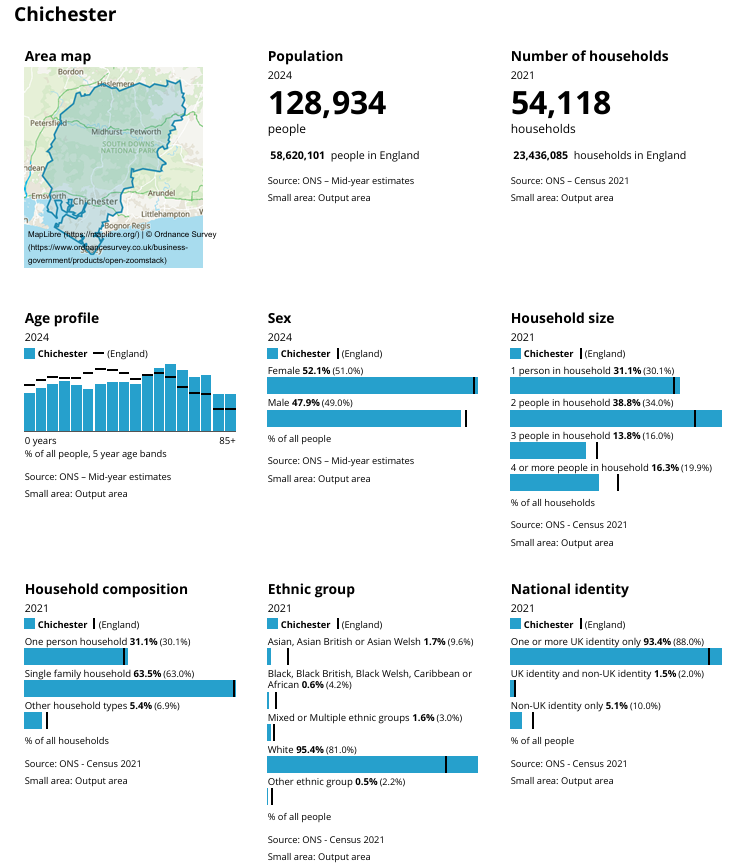
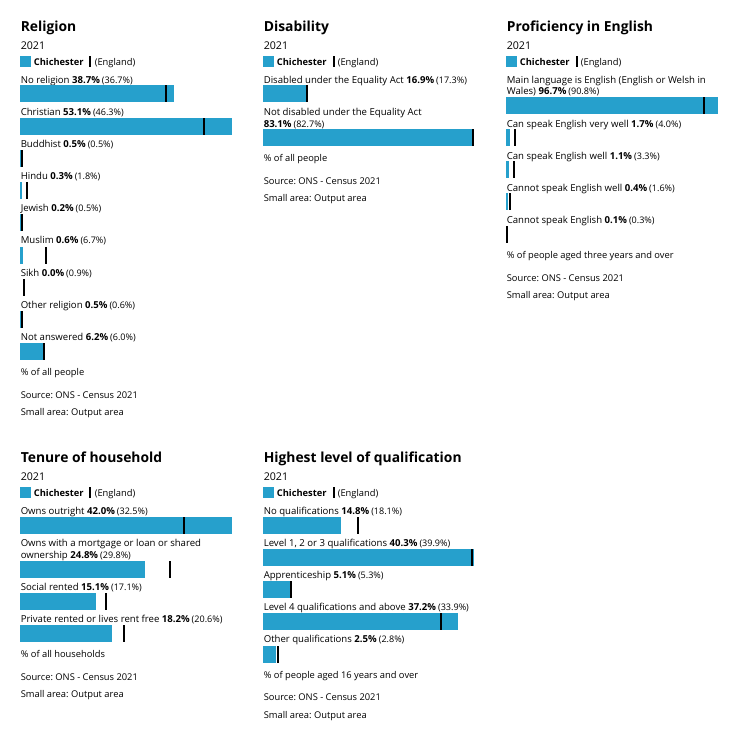
Appendix 2: Baseline Demographics of Chichester[7]
It is important to note that these statistics cover the entirety of the Chichester District including the South Downs National Park. As such, they may not reflect the exact trends across the Chichester plan area. However, they provide the most accurate representation of the demographics of Chichester as available.
| Geography | ||||
|---|---|---|---|---|
|
Chichester |
England |
|||
|
Sex |
value |
percent |
value |
percent |
|
Male |
59,515 |
48.0 |
27,656,336 |
49.0 |
|
Female |
64,553 |
52.0 |
28,833,712 |
51.0 |
| Geography | ||||
|---|---|---|---|---|
|
Chichester |
England |
|||
|
Age |
value |
percent |
value |
percent |
|
Aged 4 years and under |
5,309 |
4.3 |
3,076,950 |
5.4 |
|
Aged 5 to 9 years |
6,141 |
4.9 |
3,348,700 |
5.9 |
|
Aged 10 to 15 years |
7,908 |
6.4 |
4,057,441 |
7.2 |
|
Aged 16 to 19 years |
5,244 |
4.2 |
2,574,781 |
4.6 |
|
Aged 20 to 24 years |
6,537 |
5.3 |
3,414,452 |
6.0 |
|
Aged 25 to 34 years |
12,554 |
10.1 |
7,667,865 |
13.6 |
|
Aged 35 to 49 years |
20,077 |
16.2 |
10,978,438 |
19.4 |
|
Aged 50 to 64 years |
26,671 |
21.5 |
10,970,119 |
19.4 |
|
Aged 65 to 74 years |
16,758 |
13.5 |
5,564,143 |
9.8 |
|
Aged 75 to 84 years |
11,780 |
9.5 |
3,464,857 |
6.1 |
|
Aged 85 years and over |
5,089 |
4.1 |
1,372,301 |
2.4 |
| Geography | ||||
|---|---|---|---|---|
|
Chichester |
England |
|||
|
Ethnic Group |
value |
percent |
value |
percent |
|
Asian, Asian British or Asian Welsh |
2,168 |
1.7 |
5,426,392 |
9.6 |
|
Black, Black British, Black Welsh, Caribbean or African |
783 |
0.6 |
2,381,724 |
4.2 |
|
Mixed or Multiple ethnic groups |
2,047 |
1.6 |
1,669,378 |
3.0 |
|
White |
118,404 |
95.4 |
45,783,401 |
81.0 |
|
Other ethnic group |
669 |
0.5 |
1,229,153 |
2.2 |
| Geography | ||||
|---|---|---|---|---|
|
Chichester |
England |
|||
|
National identity |
value |
percent |
value |
percent |
|
British only identity |
71,891 |
57.9 |
32,103,291 |
56.8 |
|
English only identity |
22,288 |
18.0 |
8,615,437 |
15.3 |
|
English and British only identity |
19,658 |
15.8 |
8,057,675 |
14.3 |
|
Welsh only identity |
430 |
0.3 |
192,668 |
0.3 |
|
Welsh and British only identity |
216 |
0.2 |
86,966 |
0.2 |
|
Any other combination of only UK identities |
1,369 |
1.1 |
648,235 |
1.1 |
|
Non-UK identity only |
6,304 |
5.1 |
5,629,752 |
10.0 |
|
UK identity and non-UK identity |
1,912 |
1.5 |
1,156,024 |
2.0 |
| Geography | ||||
|---|---|---|---|---|
|
Chichester |
England |
|||
|
Religion |
value |
percent |
value |
percent |
|
No religion |
47,977 |
38.7 |
20,715,664 |
36.7 |
|
Christian |
65,910 |
53.1 |
26,167,899 |
46.3 |
|
Buddhist |
611 |
0.5 |
262,433 |
0.5 |
|
Hindu |
312 |
0.3 |
1,020,533 |
1.8 |
|
Jewish |
226 |
0.2 |
269,283 |
0.5 |
|
Muslim |
685 |
0.6 |
3,801,186 |
6.7 |
|
Sikh |
43 |
0.0 |
520,092 |
0.9 |
|
Other religion |
664 |
0.5 |
332,410 |
0.6 |
|
Not answered |
7,640 |
6.2 |
3,400,548 |
6.0 |
| Geography | ||||
|---|---|---|---|---|
|
Chichester |
England |
|||
|
Tenure of household |
value |
percent |
value |
percent |
|
Owns outright |
22,715 |
42.0 |
7,624,693 |
32.5 |
|
Owns with a mortgage or loan or shared ownership |
13,411 |
24.8 |
6,980,323 |
29.8 |
|
Social rented |
8,157 |
15.1 |
4,005,663 |
17.1 |
|
Private rented or lives rent free |
9,835 |
18.2 |
4,825,406 |
20.6 |
| Geography | ||||
|---|---|---|---|---|
|
Chichester |
England |
|||
|
Sexual orientation |
value |
percent |
value |
percent |
|
Straight or Heterosexual |
94,857 |
90.6 |
41,114,478 |
89.4 |
|
Gay or Lesbian |
1,418 |
1.4 |
709,704 |
1.5 |
|
Bisexual |
1,257 |
1.2 |
591,690 |
1.3 |
|
Pansexual |
115 |
0.1 |
45,435 |
0.1 |
|
Asexual |
59 |
0.1 |
26,614 |
0.1 |
|
Queer |
41 |
0.0 |
13,928 |
0.0 |
|
All other sexual orientations |
95 |
0.1 |
72,380 |
0.2 |
|
Not answered |
6,871 |
6.6 |
3,432,728 |
7.5 |
| Geography | ||||
|---|---|---|---|---|
|
Chichester |
England |
|||
|
Gender identity |
value |
percent |
value |
percent |
|
Gender identity the same as sex registered at birth |
99,145 |
94.7 |
43,002,331 |
93.5 |
|
Gender identity different from sex registered at birth but no specific identity given |
118 |
0.1 |
113,760 |
0.2 |
|
Trans woman |
55 |
0.1 |
45,684 |
0.1 |
|
Trans man |
90 |
0.1 |
46,513 |
0.1 |
|
Non-binary |
57 |
0.1 |
28,710 |
0.1 |
|
All other gender identities |
31 |
0.0 |
17,177 |
0.0 |
|
Not answered |
5,214 |
5.0 |
2,752,783 |
6.0 |
|
Chichester |
||||
|---|---|---|---|---|
|
Household Language |
value |
percent |
||
|
All adults in household have English in England, or English or Welsh in Wales as main language |
51,970 |
96 |
||
|
At least one but not all adults in household have English in England, or English or Welsh in Wales as a main language |
1,055 |
1.9 |
||
|
No adults in household, but at least one person ages 3 to 15 years, has English in England or English or Welsh in Wales as a main language |
256 |
0.5 |
||
|
No people in household have English in England, or English or Welsh in Wales as a main language |
838 |
1.5 |
||
Custom Profiles for Chichester ONS
Appendix 3: Consultation bodies
The definition of each consultation body according to Regulation 2 of the TCPR 2026
|
Type of Body |
Definition as per Regulation 2 of the Town and Country Planning Regulations 2026 |
|---|---|
|
General Consultation Body |
|
|
Specific Consultation Body |
|
[7] Identify baseline demographic information (ONS, 2021)
